✨ LENS 2026 · in conjunction with WACV
WACV 2026 · Tucson, Arizona · March 6–10 (workshop day TBA)

LENS: Learning & Exploitation of Latent Space Geometries

A full-day workshop on geometric foundations of learned representations and their impact on vision & AI.

About LENS

LENS brings together researchers studying the geometry of latent representations—their manifolds, Riemannian structures, intrinsic dimensions, and implications for model design and evaluation. We aim to bridge advances in geometric learning with practical computer vision applications, fostering dialogue between theory and deployments.

We welcome contributions that deepen our understanding of latent spaces (e.g., curvature, geodesics, topology), propose geometry-aware architectures and objectives, or demonstrate how latent geometry can improve robustness, generalization, fairness, privacy, and efficiency in real-world vision systems.

Quick Facts

  • 📅 Dates: March 6–10, 2026 (exact workshop day TBA)
  • 📍 Location: Tucson, Arizona, USA (with WACV 2026)
  • 📝 Proceedings: WACV Workshops (subject to WACV policy)
  • 🧭 Format: Invited talks + contributed posters (spotlights TBA)

Motivation

Recent breakthroughs in machine learning and artificial intelligence—spanning images, video, text, and other complex data—can be traced to the hidden structure of real-world data spaces. Although an image is formally a point in the immense space of all pixel arrays, the subset of natural scenes occupies a relatively low-dimensional, smooth manifold. This manifold hypothesis has far-reaching implications: if we can model and exploit the geometry of such manifolds, we can achieve more efficient, robust, and interpretable learning and inference. Early manifold learning methods (Isomap, LLE, MDS) in the 1990s–2000s pioneered this view but were limited in scalability and expressiveness. Today, large datasets, powerful computation, and deep generative models—variational autoencoders (VAEs), generative adversarial networks (GANs), diffusion and flow-based models—offer a new opportunity: to learn manifolds directly in latent spaces where data are compactly represented. These advances invite a fresh synthesis of geometry, topology, and modern AI, enabling principled exploration of latent representations, their Riemannian structure, and their role in next-generation learning algorithms.

Topics of Interest

  • Learning latent representations and their Riemannian geometry
  • Manifold learning with deep neural networks
  • Manifold hypothesis for image and multimodal data
  • Geometry-aware architectures and training objectives
  • Intrinsic dimension, dimension reduction, and encoding
  • Latent geometry for robustness, generalization, fairness, and privacy
  • Geometric evaluation metrics, diagnostics, and interpretability
  • Applications to computer vision: recognition, segmentation, and generative models

Contributed Poster Papers

  • We welcome high-quality contributed poster papers on the Topics of Interest list above.
  • Link for submitting contributed papers:
    https://openreview.net/group?id=thecvf.com/WACV/2026/Workshop/LENS
  • Please follow WACV 2026 conference directions for formatting submitted papers. The papers will be reviewed by the LENS program committee.
  • Previously Accepted Papers: We also welcome previously accepted papers aligned with workshop topics for presentations at the workshop without publication. The authors are encouraged to contact the workshop organizers directly. (anuj@stat.fsu.edu)

Important Dates

Paper submission deadline: January 15, 2026
Notification to authors: February 1, 2026
Camera-ready due: TBA (February 10, 2026)

Invited Speakers

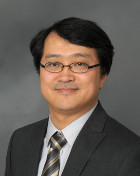
Dr. Tom Fletcher

Tom Fletcher

University of Virginia

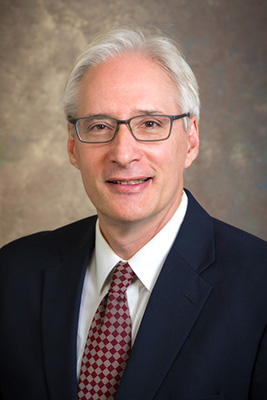
Dr. Yulia Gel

Yulia Gel

Virginia Tech University

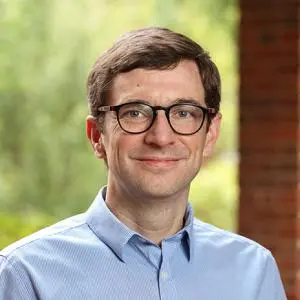
Dr. Soren Hauberg

Søren Hauberg

Technical University of Denmark

Virtual Talk
Dr. Rene Vidal

René Vidal

University of Pennsylvania
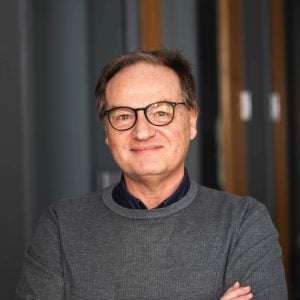
Dr. Baba Vemuri

Baba C. Vemuri

University of Florida

Dr. Laurent Younes

Laurent Younes

Johns Hopkins University

Organizing Committee

  • Anuj Srivastava (Florida State University)
  • Sudeep Sarkar (University of South Florida)
  • Pavan Turaga (Arizona State University)
  • Program Committee

  • Boulbaba Ben Amor (Inception, UAE)
  • Saket Anand (IIIT, Delhi, India)
  • Eunsom Jeon (SeoulTech, South Korea)
  • Sebastian Kurtek (Ohio State University)
  • Shenyuang Liyang (Traveler's Group)
  • Ankita Shukla (University of Reno, Nevada)